

Gardening is one of the most restorative things a person can do. Here's how to make sure it stays that way.

Photo by Megan Thomas via Unsplash
There is something quietly profound about putting a seed in the ground and waiting for it to grow. It asks for patience. It rewards attention. And it gives back, often generously, in ways both practical and deeply personal. Evolutionary biologist Edward O. Wilson had a name for this feeling: biophilia — the innate human tendency to seek connection with nature and other living things. Wilson's Biophilia Hypothesis suggests this pull toward the living world isn't sentimental; it's biological. We are drawn to gardens, to soil, to growing things, because we evolved in relationship with them.
Gardening is among the most popular leisure activities in the United States and, according to a growing body of research, one of the most beneficial. According to GardenResearch.com's 2023 National Gardening Survey, Americans spent a record $52.3 billion on lawn and garden retail sales that year — and the 55+ demographic consistently represents the highest-spending and most active segment of that market. For older adults in particular, tending a garden — whether a backyard raised bed, a collection of patio containers, or a windowsill of herbs — is associated with improvements in physical health, mental well-being, and quality of life that few other activities can match.
But here's what that conversation too often leaves out: gardening is also physically demanding. And for the millions of adults managing arthritis, reduced grip strength, back pain, or limited dexterity, the gap between wanting to garden and being able to garden comfortably can feel wide.
The goal of this post is to close that gap. We'll cover what research tells us about why gardening is so valuable, the specific physical challenges it presents for older adults, and a practical look at the tools and strategies — including several from our own workshop — that can make the difference between gardening with joy and sitting it out.
Why Gardening Is So Good for Us
The research on gardening and health is more extensive than most people realize — and the findings are consistent across dozens of studies conducted on multiple continents.
The Physical Benefits
Gardening is a form of low-to-moderate intensity physical activity that engages nearly every major muscle group. Digging, lifting, carrying, kneeling, reaching, and pruning combine strength training, flexibility work, and aerobic conditioning into a single outdoor session. Because it's goal-directed — you're planting, not exercising — it holds people's attention longer than gym-based workouts, which means more accumulated activity over time.
Research published in peer-reviewed journals has found that regular gardening activity in older adults is associated with improvements in muscle mass, aerobic endurance, hand dexterity, and flexibility. A 2023 review of studies found that participation in horticultural activities increased physical flexibility and aerobic endurance among older adults. Perhaps most striking, a 2025 study from Baylor College of Medicine tracking more than 2,600 participants found that seniors who garden were less likely to have X-ray evidence of knee arthritis or knee pain — a remarkable finding given that age itself is one of the strongest risk factors for knee osteoarthritis.
"Gardening requires lots of water — most of it in the form of perspiration."
– Lou Erickson
Gardening also keeps people moving in ways that support bone density and balance, both of which decline with age and both of which are critical for preventing falls.
The Psychological Benefits
The mental health benefits of gardening may be even more compelling than the physical ones.
Horticultural therapy — the structured use of plant-based activities to support health — has been recognized as a therapeutic modality within occupational therapy for decades. The research literature identifies several mechanisms: the sensory engagement of working with soil, plants, and sunlight; the sense of purpose and accomplishment that comes from nurturing living things; the cognitive engagement required for planning, sequencing, and problem-solving; and the restorative quality of natural environments, which reduces the mental fatigue associated with sustained attention.
That last point has a rigorous theoretical foundation. Environmental psychologists Rachel and Stephen Kaplan developed Attention Restoration Theory (ART) to explain why time in natural settings reliably reduces mental fatigue. Their framework distinguishes between "directed attention" — the focused, effortful concentration required for work, screens, and urban navigation — and "soft fascination," the gentle, effortless engagement that natural environments provide. Gardens, in particular, offer what the Kaplans called a "restorative environment": a space that holds interest without demanding sustained focus, allowing the brain's attentional systems to recover. This is not a metaphor for relaxation. ART describes a physiological restoration process, and the gardening research consistently reflects it.
The data confirms this. A 2023 controlled trial published in The Lancet Planetary Health found that first-time community gardeners experienced a 15% reduction in perceived stress compared to a control group — a significant, measurable outcome from an activity most participants simply enjoyed. One 2024 research study found that just ten minutes of watering indoor houseplants measurably reduced both physical and psychological stress markers in older adults — as measured by EEG and blood pressure readings — compared to a control activity. Remarkably, even that small, quiet act of tending a plant produced a physiological relaxation response.
For older adults managing cognitive decline, the benefits extend further. Research suggests that gardening can reduce agitation in individuals with dementia, improve mood and cognitive function, and reduce the need for medication to manage behavioral symptoms.
There is another psychological dimension worth naming: the experience of flow. Psychologist Mihaly Csikszentmihalyi described flow as a state of total, effortless immersion in a sufficiently challenging activity — the point where skill and task difficulty are so well matched that time disappears and the self recedes. Gardening is a natural flow-producing activity. It requires enough planning, sequencing, and sensory attention to fully engage the mind, while remaining physically grounded in immediate, tangible feedback. The critical factor is that the physical demands of the activity must be manageable. When a task is too painful or requires too much compensatory effort, the flow state is broken — the activity becomes about the difficulty, not the doing. Ergonomic tools restore the challenge-skill balance that allows gardeners of any age or ability to return to that absorbed, time-dissolving state.
The Social and Purposive Benefits
Gardening gives people something to care for, plan around, and look forward to. That sense of purpose — what psychologists call "occupational engagement" — is one of the strongest predictors of well-being in later life. A study in the journal HERD found that older gardeners reported enhanced self-esteem, a sense of productive contribution, and richer social connections, particularly those involved in community garden settings.
For people aging in place, a garden also provides a reason to go outside each day, to establish seasonal routines, and to engage with neighbors and the natural world. These are not small things. They are the fabric of a meaningful daily life.
Photo by Zoe Richardson via Unsplash
The Challenges That Get in the Way
Given everything gardening has to offer, the fact that so many older adults reduce or abandon the activity is worth examining carefully. The barriers are real — and they're mostly physical.
Arthritis and Joint Pain
Arthritis is the most common condition cited by older adults as limiting their gardening activity. According to the CDC, approximately 58.5 million adults in the United States — roughly 1 in 4 — have doctor-diagnosed arthritis, making it one of the leading causes of work disability and activity limitation in the country. The condition disproportionately affects adults over 65. The joints most affected — the small knuckles of the fingers, the base of the thumb, the wrists, and the knees — are precisely the ones most engaged in garden tasks.
Gripping a hand trowel, pinching tiny seeds between two fingers, squeezing pruner handles, turning a hose spigot, pressing a dibber into compacted soil: each of these tasks places direct stress on the joints that arthritis targets most.
Reduced Grip Strength
Hand grip strength naturally declines with age beginning around the mid-40s and continues throughout life. The scale of this change is striking: research from the National Institutes of Health shows that mean grip strength for men drops from approximately 45 kg at age 30 to around 32 kg by age 75 — a reduction of nearly 30%. For women, the decline moves from roughly 24 kg to 18 kg over the same period. This isn't a marginal change. It means that a 75-year-old man is, on average, operating with roughly the same grip force as a healthy 30-year-old woman — and many older adults fall below that average. This decline affects not just the power available for strong gripping, but also the precision and endurance needed for fine motor tasks like handling seeds, managing small bottle caps, and working with lightweight but fiddly garden equipment.
Standard garden tools are almost universally designed with grip strength assumptions that don't match the reality of aging hands. Thin handles require a tighter pinch to control. Short tools demand awkward wrist angles. Small seeds demand extraordinary fine-motor precision that many adults simply don't have consistently — especially in cold weather, when joint pain tends to spike.
Back Pain, Bending, and Posture
Most traditional gardening requires working at ground level: kneeling to plant, bending to weed, squatting to inspect, crouching to reach the back of a bed. For adults with lower back pain, hip problems, or reduced flexibility, sustained time in these positions is not just uncomfortable — it can cause injury or take days to recover from.
"A weed is a plant that has mastered every survival skill except for learning how to grow in rows."
– Doug Larson
The physical demands of setup and teardown — hauling bags of soil, dragging hoses, carrying tools — add further load to a body that may have less resilience than it once did.
Cognitive Load: The "Did I Water This?" Problem
Less discussed but equally real is the cognitive dimension of plant care. Plants require consistent, scheduled attention: watering at the right frequency, feeding at the right intervals, planting at the right depth. For gardeners managing memory concerns, or simply managing the natural cognitive load of a busy life, keeping track of which plants were watered when — especially across a collection of houseplants or a densely planted outdoor bed — is a source of genuine stress and frequent, costly mistakes.
Overwatering is the number one killer of houseplants. It's usually not negligence; it's uncertainty. "Did I water this Tuesday or Thursday?" is a question that leads to erring on the side of another watering, which drowns the roots.
How Good Design Changes the Equation
Here is the encouraging truth about every challenge listed above: none of them are insurmountable. Most of them are design problems. And design problems have design solutions.
The ergonomic design revolution that transformed kitchen tools in the 1990s — sparked largely by OXO's Good Grips line, which was originally designed for a designer's wife who had arthritis — is now making its way into every category of daily living product. The principle is the same: stop assuming everyone has the same hands, and start designing for the full range of human ability.
This principle has a formal name and a rigorous framework behind it. Architect Ronald Mace coined the term Universal Design to describe the design of products usable by all people, to the greatest extent possible, without the need for special adaptation. Among Universal Design's seven principles, two are especially relevant to garden tools: Low Physical Effort (designs should be usable efficiently and comfortably, with a minimum of fatigue) and Size and Space for Approach and Use (appropriate size and space should be provided for reach, manipulation, and use regardless of body size, posture, or mobility). Every handle geometry improvement, every reduction in required torque, every elimination of a fine-motor demand is an expression of these principles in practice. Universal Design doesn't make tools easier; it makes them right.
What follows is a look at the categories of adaptive tools that make the biggest difference for gardeners, along with specific products designed with these principles at heart.
1. Precision Seed Planting: Eliminate the Fumble
The challenge: Starting seeds is a critical step in the growing season, and traditionally one of the most finger-intensive. Conventional garden dibbers — essentially pointed sticks — require you to make a hole, then set the dibber aside, pick up a seed with pinched fingers, lower it into the hole without dropping it, cover it, and move on. Repeat hundreds of times. Each repetition requires a precise pinch grip on something as small as a tomato or basil seed.
"Knowledge is knowing a tomato is a fruit; wisdom is not putting it in a fruit salad."
– Miles Kington
The broader solution: Look for a seeder that integrates the hole-making and seed-placing steps into a single motion, and that can be operated with a palm grip rather than a pinch grip. Depth markers eliminate guesswork and prevent the additional fumbling that comes from trying to gauge depth by eye.
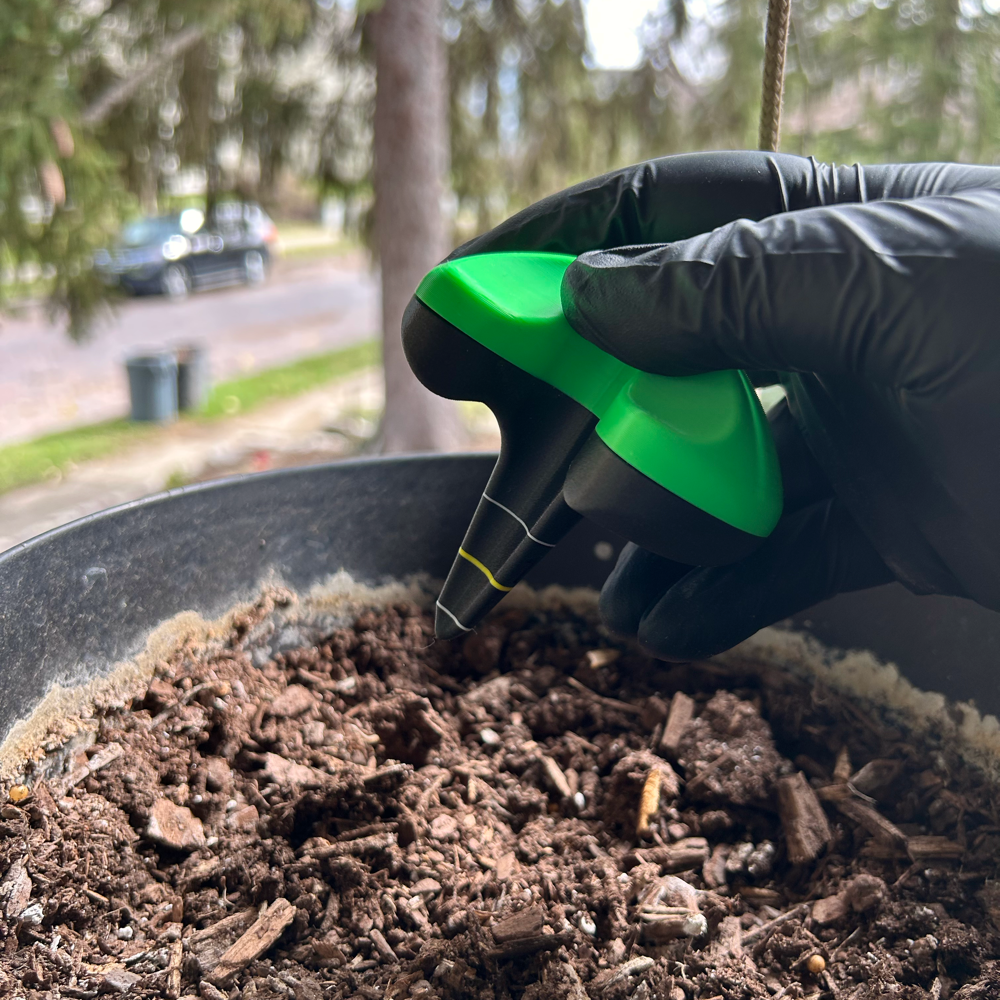
The Seed & Slide™ was built around exactly this workflow. Press it into the soil to your desired depth — the tool has visible depth markers so there's no guesswork — then drop the seed into the top notch while the tool is still in the soil. An internal ramp delivers the seed precisely to the bottom of the hole.
No more setting down the dibber and fumbling for a seed. No more seeds blown sideways by a passing breeze. The ergonomic palm grip with integrated thumb-rest notches means you're using your body weight and larger muscle groups to press into the soil, not just your fingers and wrists.
The tool itself is made from carbon fiber-reinforced ASA — lightweight, UV-resistant, and strong enough to push through compact clay or rocky soil that would snap a standard plastic dibber.
2. Turning the Spigot: Water Access Without the Strain
The challenge: Before any watering can happen, someone has to turn on the hose. For a gardener with reduced grip strength or wrist pain, a stubborn outdoor spigot handle can be a genuine barrier — not just a minor inconvenience. The standard cross-shaped or round spigot handle was designed for maximum compactness, not maximum accessibility. It provides almost no mechanical advantage, which means all the turning force has to come from the hand and wrist directly.
Compounding the problem: many spigots are located low on the house exterior, often behind shrubbery or in awkward corners. Getting to them requires bending, reaching, and sometimes squatting — a combination that strains the lower back and knees before the garden session has even started.
The broader solution: Any tool that extends the lever arm of the spigot handle dramatically reduces the force required to turn it. An additional handle that allows you to stand more upright while operating the spigot addresses the posture problem simultaneously.
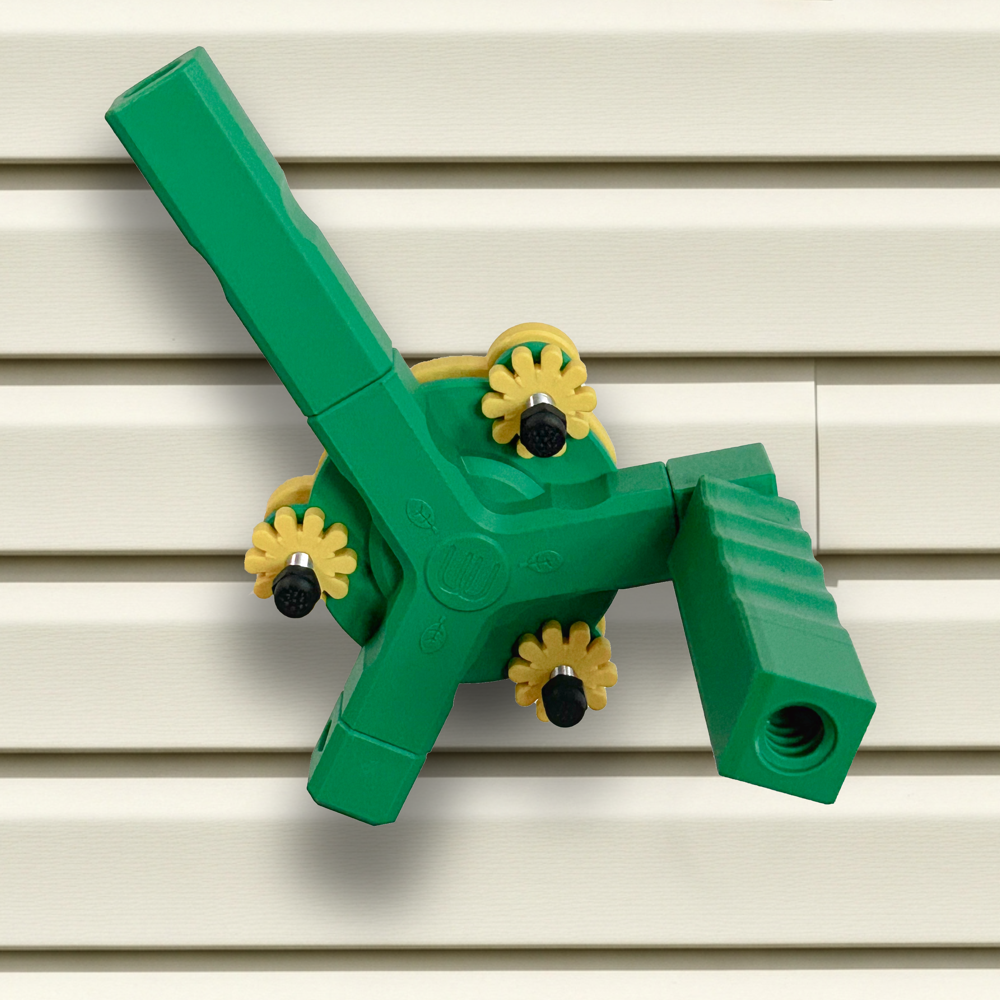
The Spigot Turner clamps directly over your existing spigot handle with a tool-free installation that takes seconds. Its large grip surface provides mechanical advantage that makes turning dramatically easier, and the included handle options — an extension handle, a 90-degree handle, and a lanyard-hole handle — let you operate the spigot from a more comfortable, upright position without bending down to reach.
Made from weather-resistant ASA plastic with stainless steel hardware, it lives outside year-round. For gardeners who've found themselves avoiding the garden on days when the pain of reaching the spigot didn't feel worth it, this is the kind of small adaptation that quietly restores independence.
3. Plant Care Reminders: Solving the Cognitive Load
The challenge: Plants need consistency, not intensity. Most people don't kill plants by neglect — they kill them by uncertainty. Without a reliable, at-a-glance reminder of when a plant was last watered or fed, caregivers default to guessing, which leads to both over-watering and irregular fertilizing schedules that stunt growth.
This challenge is especially relevant for older gardeners managing a larger collection of plants, or anyone dealing with cognitive fatigue, memory variability, or the kind of busy schedule that makes "I'll remember this" an unreliable strategy.
The broader solution: A physical, persistent reminder that lives with the plant — not in a phone app that requires unlocking the phone, finding the app, and reading small text. The reminder should require no fine motor precision to operate, should be readable at a glance, and should function indoors and outdoors.
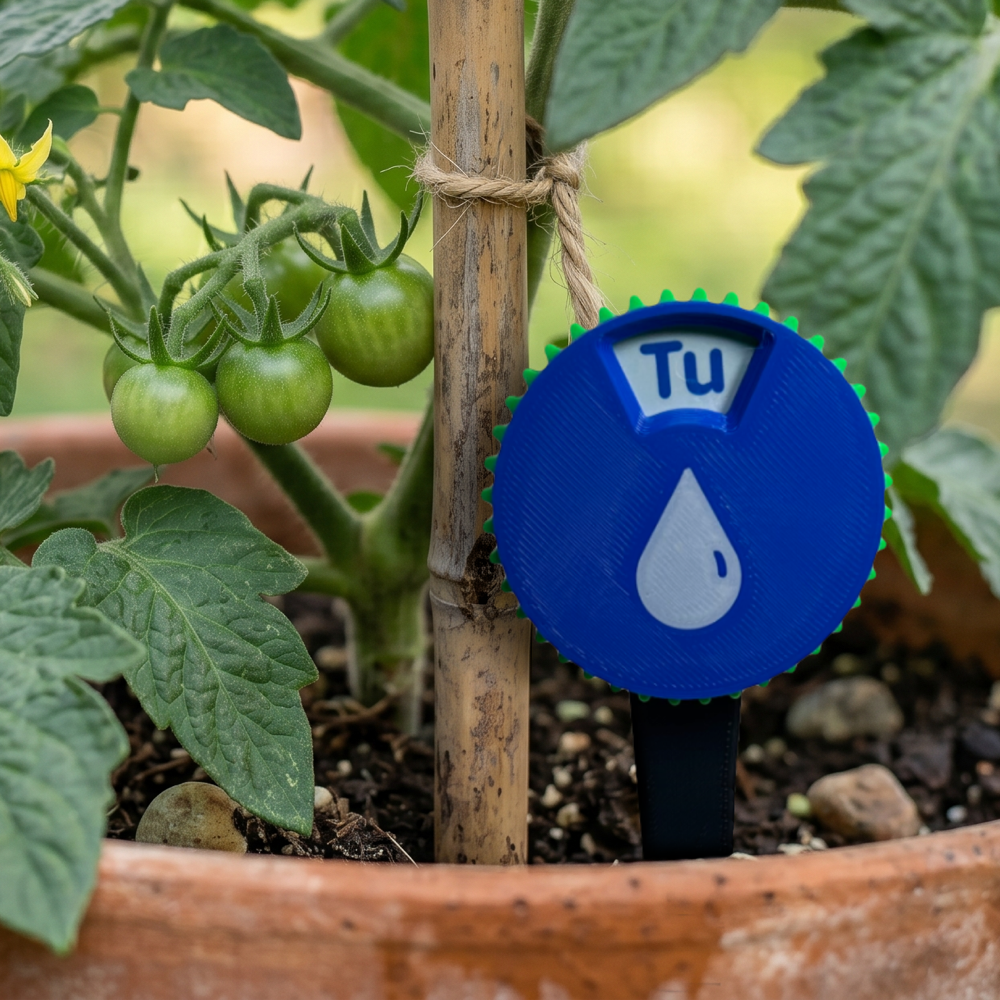
The Plant Care Reminder Stakes come in two versions: a weekly watering tracker with a day-of-the-week dial (M through Su), and a monthly feeding tracker with a date dial (1 through 31). Both feature a "toothed" gear dial with a tactile click that holds position securely but is easy to turn — even with gloves on or dirty hands.
High-contrast colors (bright blue, vibrant green, crisp white) make them readable from across the room. The spike pushes easily into potting soil or garden bed; for plants growing in water or on shelves, an included desktop stand keeps the reminder next to the plant without needing soil at all. For a household with ten plants in varying locations and varying schedules, these provide a simple system that removes the guesswork entirely.
4. Ergonomic Handles: The Non-Negotiable Foundation
Across every garden task, the single most impactful design variable is the handle. Research from physical therapy and ergonomics consistently shows that handle geometry directly determines how much muscle force a task requires, where that force is concentrated, and whether the wrist must deviate into a strained position to complete the task.
The key principles, as identified in the ergonomic gardening literature, are:
Neutral wrist position. When the wrist is flexed, extended, or deviated sideways, grip strength drops and joint stress increases. Tools that allow the wrist to remain straight — as if you were shaking someone's hand — require less force and cause less pain. This is the same principle behind the Ergonomic Herb Stripper's perpendicular handle design.
Larger grip diameter. Counterintuitively, a larger handle diameter reduces the pinch force required to maintain grip — up to a point. Very thin handles require the fingers to curl farther and squeeze harder. For arthritic hands, wider, padded handles that allow a full palm grip are significantly less painful.
Weight distribution. A heavy tool head on a short handle creates a torque load on the wrist. Longer handles distribute weight better, and lighter materials (aluminum, high-grade polymer composites like the carbon fiber ASA used in the Seed & Slide™) reduce overall load.
Leverage over force. Wherever a task requires rotating or pressing, tools that provide additional mechanical advantage — longer handles, wider bases, articulating joints — reduce the raw force required at the hand.
When shopping for garden tools, look for these features in pruners, trowels, and hand forks before you look at anything else. The difference between a well-designed and a poorly designed handle can be the difference between an enjoyable hour in the garden and a day of recovery.
5. Workspace Design: Work Smarter, Not Lower
Beyond individual tools, how you organize the physical space of your gardening activity matters enormously. Ergonomic tools work best when paired with an ergonomic setup.
A useful framework here comes from gerontology: the Environmental Press Model, developed by M. Powell Lawton and Lucille Nahemow. The model describes the relationship between a person's physical competence and the "press" — the demands — of their environment. When an environment makes demands that exceed a person's current competence, the result is stress, withdrawal, and ultimately abandonment of the activity. But when the environment is thoughtfully adapted to match a person's actual capabilities, people remain active, engaged, and in what Lawton called the "adaptive zone" — a space where they can function effectively and with confidence. Raising a garden bed is, in the most literal sense, lowering the environmental press. So is every tool that reduces the force required to do the same work.
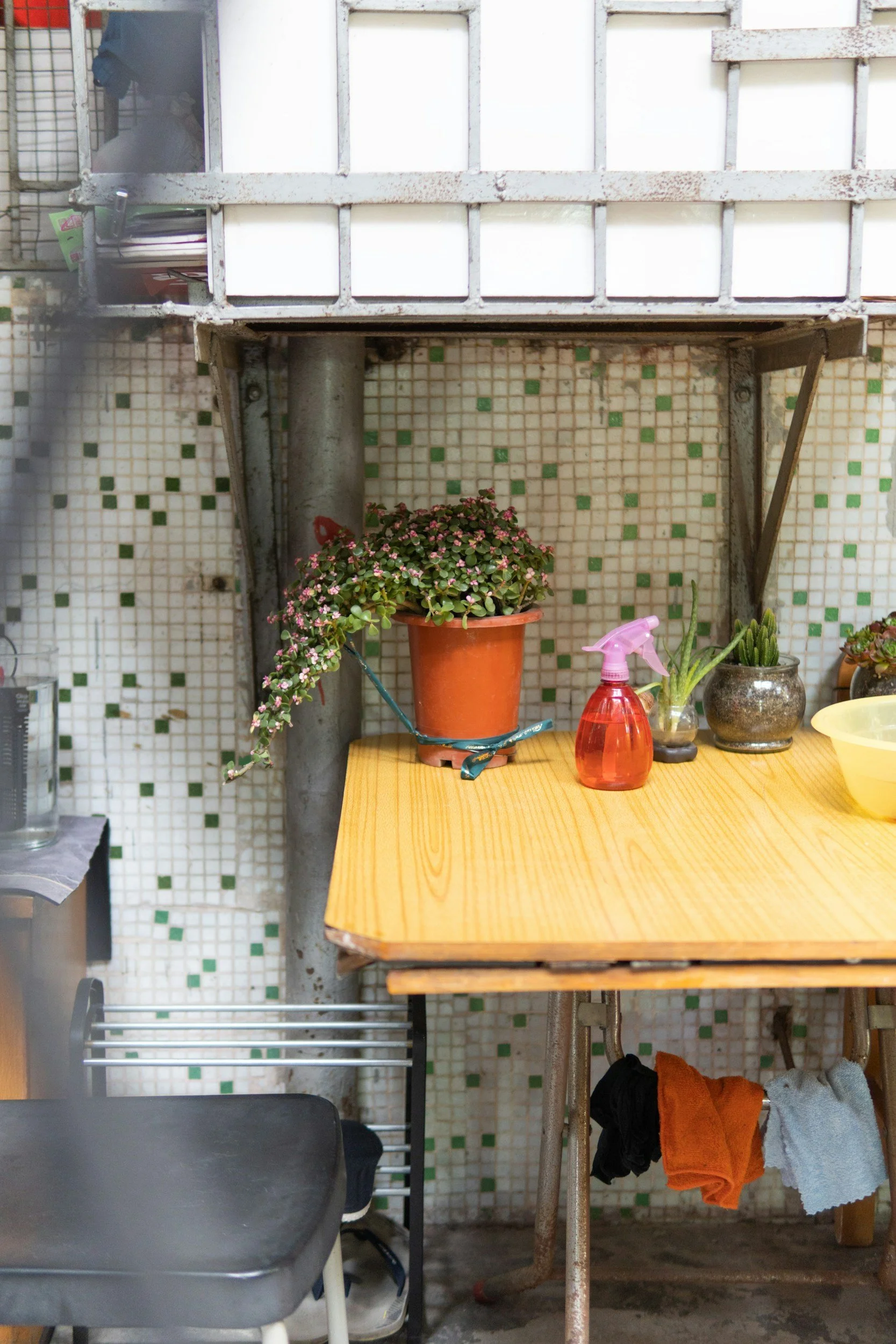
Gardening considerations:
Raised beds and container gardening eliminate the single biggest physical demand in traditional gardening: working at ground level. A raised bed built to waist height removes all the bending, kneeling, and squatting that strains the back, hips, and knees. Even a simple increase from ground level to 12–18 inches dramatically reduces postural strain. If building or retrofitting raised beds isn't practical, container gardening on tables or elevated stands achieves the same effect.
Work surfaces near the planting area — a potting bench, a folding table, or even a sturdy outdoor shelf — allow you to do the fine-motor work of seed handling, potting, and transplanting while seated or standing at a comfortable height, rather than hunched over a ground-level bed.
Short sessions with rest matter more than long sessions. Research on gardening and older adults notes that fatigue accumulates quickly and can cause form to deteriorate in ways that lead to injury. Fifteen focused, comfortable minutes are worth more than an hour of pushing through discomfort. Give yourself permission to do the work in stages.
Putting It Together: A Practical Season Starter
If you're setting up or returning to a garden this season with ergonomic principles in mind, here is a practical sequence:
Before you plant: Set up your workspace at a comfortable height. Confirm your water access is easy to operate — if the spigot has been a struggle, address that first. Gather your seed-starting tools.
Starting seeds: Use the Seed & Slide™ to place seeds at consistent depth without fine-motor fumbling. Start with a smaller section than you think you'll want — it's easier to expand a successful small garden than to abandon an overwhelming large one.
Plant care routine: Once plants are established, put a Plant Care Reminder Stake in each pot or bed immediately. The habit of turning the dial when you water is far easier to build than the habit of remembering when you last watered.
Ongoing maintenance: Use the Spigot Turner to make water access effortless. Schedule garden tasks for the time of day when your joints feel best — for most people with arthritis, that's late morning after stiffness has resolved but before the day's fatigue has set in. Warm up with a few minutes of gentle hand and wrist movement before you begin.
Tool selection: Apply the neutral wrist, full palm grip, and mechanical advantage criteria to every tool you buy or already own. Replace tools that require sustained pinching or awkward wrist angles with better-designed alternatives, one at a time.
The Point Is the Garden
All of these tools and strategies exist in service of a single goal: keeping you in the garden.
The research is unambiguous that gardening — even at a modest scale, even for short sessions, even tending a small collection of houseplants — returns real and meaningful benefits to physical health, mental well-being, and quality of life. The barrier isn't desire. For most older adults who've stepped back from gardening, it's the accumulation of small physical friction points that have made the activity feel harder than it's worth.
Good design dissolves friction. It doesn't ask you to push through pain or "just manage." It changes the mechanics of the task so that the work is genuinely easier — not because you've lowered your standards, but because the tool is finally doing its job.
The dirt is waiting. The seeds are ready.
Useful & Usable Workshop™ designs ergonomic, inclusive everyday tools grounded in human-centered design. Explore our full collection of gardening and household tools at uuworkshop.com/products, or visit our Etsy shop to purchase. Disclaimer: These products are intended as convenience aids and are not medical devices. They are not intended to diagnose, treat, cure, mitigate, or prevent any disease, injury, or disability. Please consult your healthcare provider for any medical concerns.